
Menu
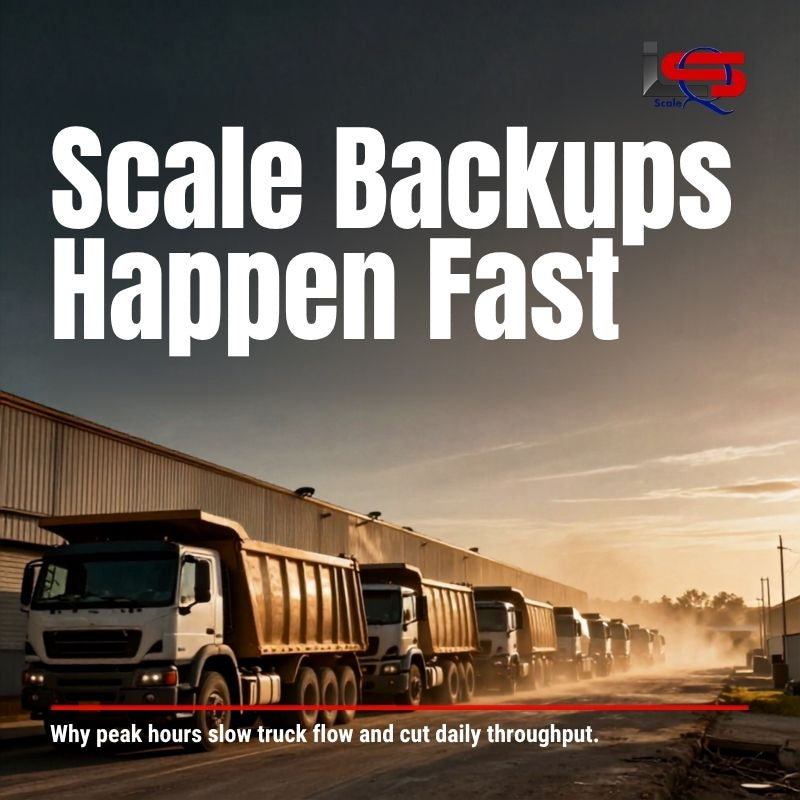

Why Your Scale House Gets Backed Up During Peak Hours
June 23, 2026 2 min read
Why Your Scale House Gets Backed Up During Peak Hours
During busy periods, scale operations are expected to move trucks quickly and efficiently. However, many facilities experience backups at the scale during peak hours, leading to delays, frustration, and reduced daily throughput. These slowdowns are rarely caused by a single issue but are usually the result of several small inefficiencies that become more noticeable as traffic increases.
Truck Traffic Increases, But the Process Stays the Same
Volume Exposes Weaknesses in the Workflow
As truck volume increases, the scale process is put under pressure. What may work during slower periods often begins to break down when more trucks need to be processed in less time. If the system or workflow is not designed to handle higher demand, even minor inefficiencies can create significant delays.
Manual Processes Slow Everything Down
Repetitive Tasks Create Bottlenecks
Operations that rely on manual entry or repeated steps at the scale often struggle to keep up during peak hours. Common delays include entering ticket information manually, verifying data repeatedly, and switching between systems or screens. Each step adds time to every transaction, and when multiplied across many trucks, these delays quickly lead to long lines.
Poor Communication Creates Confusion
When Drivers Don’t Know What to Do, Everything Slows Down
One of the most common causes of scale backups is a lack of clear communication between drivers and scale operations. This often results in drivers waiting for instructions, uncertainty about where to stop or when to proceed, incorrect or incomplete load information, and reweighs caused by miscommunication. During peak periods, these interruptions happen more frequently and make it difficult to maintain a steady flow of trucks.
Inconsistent Workflows Reduce Efficiency
When Every Transaction Is Handled Differently
A consistent process is critical for maintaining speed at the scale. When operators handle transactions differently, even small variations can slow down operations. This may include inconsistent ticketing procedures, different communication methods with drivers, and varying steps depending on the operator. Without a repeatable process, efficiency drops and delays increase.
Small Delays Add Up Quickly
Seconds Per Truck Turn Into Major Slowdowns
Even a delay of just a few seconds per truck can significantly impact daily performance. During peak hours, these small inefficiencies compound and reduce the number of trucks that can be processed. What seems like a minor delay can result in longer wait times, fewer loads processed, and increased congestion in the yard.
The Impact on Your Operation
Reduced Throughput and Increased Frustration
When the scale becomes a bottleneck, the entire operation is affected. Drivers spend more time waiting, operators feel pressure to move faster, and overall efficiency declines. This can lead to missed productivity targets, frustrated drivers and staff, and an increased potential for errors.
Moving Toward More Efficient Scale Operations
Creating a Faster, More Consistent Process
Reducing backups at the scale starts with eliminating inefficiencies in the process. When workflows are consistent, communication is clear, and manual steps are minimized, operations can move trucks more quickly and reliably. Interface Logic Systems solutions are designed to support these improvements by helping streamline workflows, reduce delays, and provide better visibility across the entire weighing process.
Leave a comment
Comments will be approved before showing up.
Subscribe
Sign up to get the latest on sales, new releases and more …