Menu

How Scale Software Supports Rail-to-Truck Transloading Operations
August 24, 2026 3 min read
Rail-to-truck transloading operations play an important role in moving bulk materials from one transportation method to another. Whether transporting frac sand, aggregates, minerals, recycled materials, or other bulk products, transloading facilities depend on accurate tracking, inventory visibility, and material accountability throughout the entire process.
As materials move from railcars to trucks for final delivery, maintaining accurate records becomes essential for both operational efficiency and financial accountability.
What Is Rail-to-Truck Transloading?
Rail-to-truck transloading is the process of receiving bulk material by rail and transferring that material to trucks for delivery to another location.
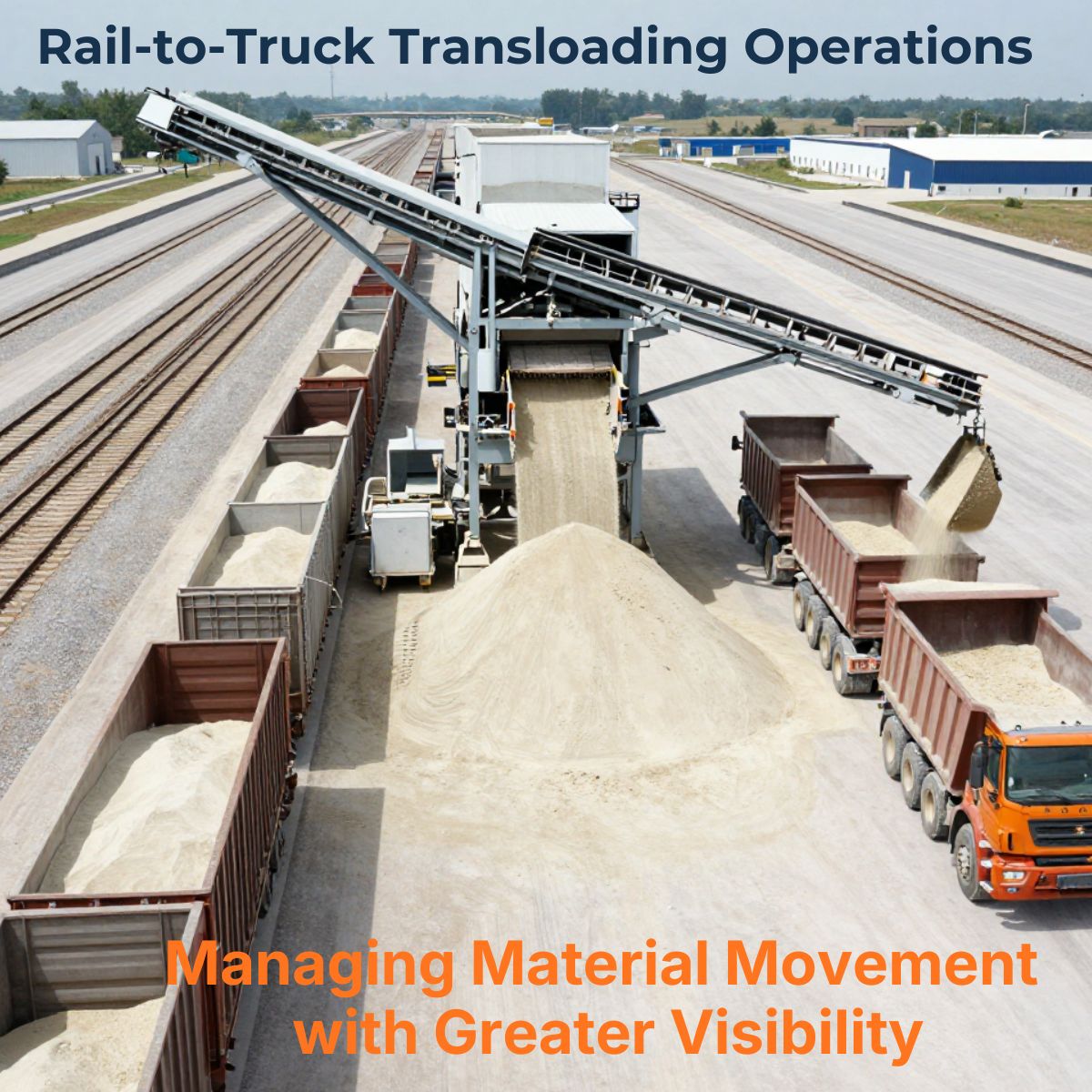
A common example is frac sand used in oil and gas operations. Railcars arrive loaded with sand that is unloaded through conveyors or material handling systems and transferred into trucks. Those trucks then transport the material to well sites or other destinations.
While the process appears straightforward, maintaining visibility into material movement presents several challenges.
Tracking Material Through Multiple Transfer Points
In many transloading operations, materials move through several stages before reaching their final destination.
A typical workflow may include:
- Material arriving by railcar
- Railcar quantities being recorded
- Material transferred through conveyors or storage systems
- Trucks being loaded
- Material delivered to customers or job sites
Each transfer point creates an opportunity for discrepancies if material quantities are not properly tracked and reconciled.
Maintaining visibility throughout the process helps operations improve accountability and reduce uncertainty.
Inventory Visibility Matters
Inventory visibility becomes increasingly important when dealing with large volumes of bulk material.
Operations need to understand:
- How much material arrived
- How much material has been transferred
- How much material remains on site
- How much material has been shipped
Without accurate tracking, inventory reporting becomes difficult and material losses may be harder to identify.
Scale software helps provide the information needed to better understand inventory movement throughout the operation.
Managing Material Accountability
Material accountability is often a critical requirement in transloading operations.
Rail carriers may provide reported quantities for incoming material. As material moves through unloading, storage, and loading processes, operations need reliable records of what was received and what was shipped.
Accurate weighing, ticketing, and reporting help create a documented chain of custody that supports:
- Inventory reconciliation
- Operational reporting
- Customer billing
- Internal auditing
- Material accountability
Improving Operational Efficiency
Efficient material movement is essential in high-volume transloading facilities.
Scale software helps streamline operations by providing:
- Fast transaction processing
- Automated ticket generation
- Customer and job tracking
- Centralized reporting
- Historical transaction records
By reducing manual processes and improving access to operational data, facilities can process shipments more efficiently while maintaining accuracy.
Reporting and Reconciliation
One of the most valuable aspects of scale management software is the ability to generate reports that help operations compare incoming and outgoing material quantities.
Reporting tools can assist with:
- Railcar receipts
- Truck shipments
- Customer transactions
- Inventory reconciliation
- Operational performance analysis
Having access to accurate data helps management make informed decisions and identify opportunities for improvement.
Supporting Modern Transloading Operations
As transportation and material handling operations continue to evolve, access to accurate information becomes increasingly important.
Scale software provides the weighing, ticketing, reporting, and inventory visibility tools needed to support rail-to-truck transloading operations while helping improve accountability and operational efficiency.
Whether managing frac sand, aggregates, recycled materials, or other bulk commodities, modern scale management systems help operations maintain visibility from receipt through final delivery.
Learn More
Interface Logic Systems provides scale management software and automation solutions for bulk material handling, transloading, aggregate, asphalt, recycling, waste, mining, and industrial operations. Contact us and let us know your business needs.
Leave a comment
Comments will be approved before showing up.
Subscribe
Sign up to get the latest on sales, new releases and more …