
Menu
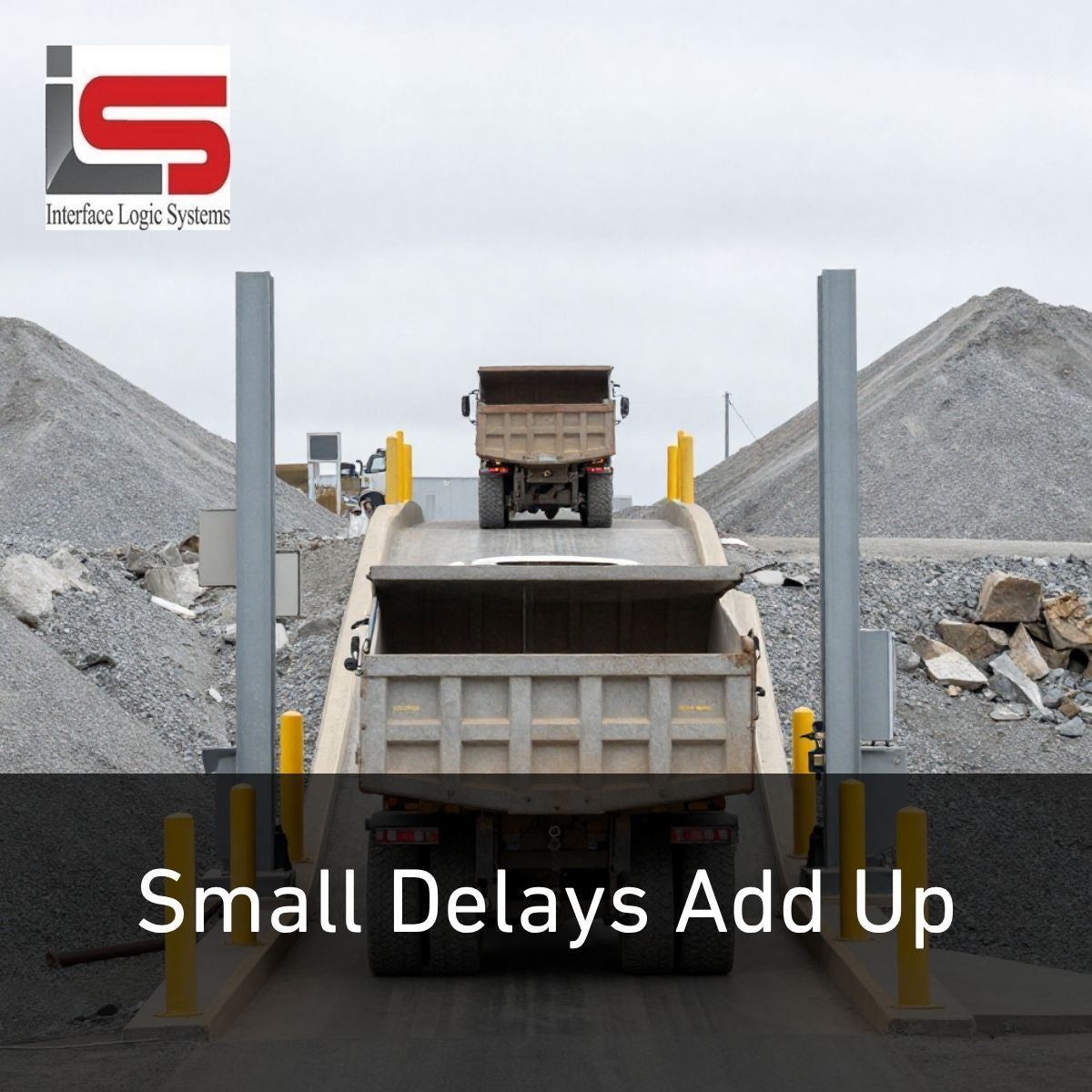

How Small Delays at the Scale Reduce Daily Tonnage
July 20, 2026 2 min read
How Small Delays at the Scale Reduce Daily Tonnage
In high-volume operations, efficiency at the scale plays a critical role in overall productivity. While major delays are easy to identify, small delays often go unnoticed. However, these minor slowdowns can accumulate throughout the day and significantly reduce total tonnage.
Understanding how these delays impact daily operations is key to improving performance and maintaining consistent throughput.
Small Delays Add Up Quickly
Seconds Per Transaction Become Minutes Per Hour
Even a small delay during each transaction can have a measurable impact over time. When trucks are processed continuously, an extra few seconds per load quickly adds up.
For example:
- an extra 10 seconds per transaction
- across dozens or hundreds of trucks
- can result in minutes or hours of lost time
During peak periods, this lost time directly reduces the number of loads processed in a day.
Manual Steps Increase Processing Time
Repetition Slows Down the Workflow
Operations that rely on manual processes often introduce small delays at each stage. Entering data, verifying information, and correcting details all take time, even when done efficiently.
These steps may include:
- entering ticket data manually
- reviewing and confirming load details
- switching between systems or processes
While each step may only take a few seconds, together they reduce overall efficiency.
Interruptions Break the Flow
Stop-and-Go Processes Reduce Throughput
A steady flow of trucks is essential for maintaining efficiency at the scale. When that flow is interrupted, even briefly, it becomes difficult to maintain consistent processing speed.
Common interruptions include:
- waiting for driver communication
- pausing to edit or correct ticket information
- handling exceptions or unexpected issues
These interruptions create a stop-and-go pattern that slows down operations.
Inconsistent Processes Create Variability
Lack of Standardization Impacts Speed
When processes vary from one transaction to another, it introduces inconsistency that can slow performance. Differences in how tasks are handled can create small but frequent delays.
This may include:
- different approaches between operators
- varying steps during ticketing
- inconsistent communication with drivers
Standardized workflows help reduce these variations and improve overall speed.
Daily Impact on Throughput
Small Inefficiencies Reduce Total Output
As small delays accumulate throughout the day, the overall impact becomes significant. Fewer trucks are processed, and total tonnage decreases.
This can result in:
- reduced daily throughput
- longer wait times during peak hours
- missed operational targets
Improving efficiency at each step helps maximize total output over time.
Improving Efficiency at the Scale
Reducing Delays and Increasing Consistency
The most effective way to reduce small delays is by simplifying processes and improving consistency across operations. When workflows are clear and repeatable, truck movement becomes more efficient.
Interface Logic Systems solutions are designed to support these improvements by helping reduce manual steps, improve communication, and create a more consistent operational flow.
Leave a comment
Comments will be approved before showing up.
Subscribe
Sign up to get the latest on sales, new releases and more …