Menu

Why Manual Scale Processes Still Cost You Time
July 28, 2026 2 min read
Why Manual Scale Processes Still Cost You Time
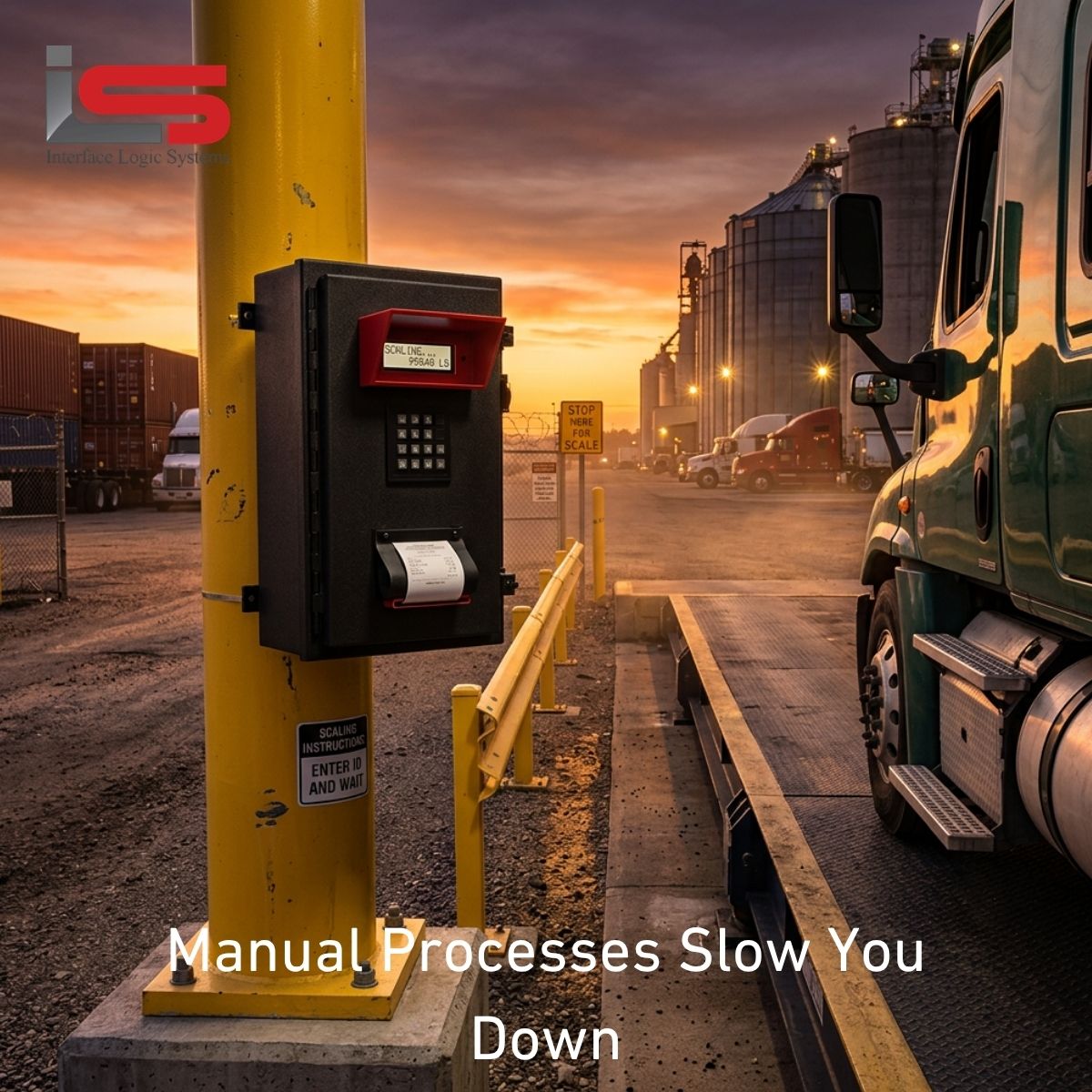
Many scale operations rely on a combination of manual processes and existing systems to manage daily workflows. While these processes may seem manageable, they often introduce inefficiencies that slow down operations over time.
In high-volume environments, even small inefficiencies in manual processes can reduce throughput and impact overall productivity.
Manual Entry Slows Down Transactions
Repetitive Tasks Reduce Efficiency
Manual data entry is one of the most common sources of delay at the scale. Operators are often required to input information such as materials, customers, and load details for each transaction.
These repeated actions:
- add time to every transaction
- increase operator workload
- create opportunities for inconsistency
While each step may only take a few seconds, they add up quickly throughout the day.
Manual Processes Increase the Risk of Errors
More Input Leads to More Corrections
The more manual steps involved in a process, the greater the chance for errors. Incorrect entries, missing information, or miscommunication can lead to ticketing mistakes that require correction later.
This often results in:
- edited or corrected tickets
- rework and verification steps
- additional time spent resolving issues
Reducing manual input helps improve both speed and accuracy.
Inconsistent Workflows Slow Down Operations
Different Approaches Create Variability
Without standardized processes, operators may handle transactions differently. This inconsistency can introduce small delays and make it difficult to maintain a steady flow of trucks.
Variability in workflows may include:
- different data entry methods
- inconsistent communication with drivers
- varying steps during ticketing
Standardizing processes helps improve consistency and efficiency.
Manual Communication Creates Delays
Reliance on Verbal Interaction Slows Flow
Many manual processes depend on communication between operators and drivers. When this communication is unclear or inconsistent, it can lead to delays.
Common impacts include:
- drivers waiting for instructions
- incorrect information being entered
- additional steps to clarify details
Reducing reliance on manual communication helps keep operations moving more smoothly.
The Cumulative Impact on Throughput
Small Inefficiencies Add Up Over Time
Each manual step adds a small amount of time to the process. Over the course of a full day, these small delays accumulate and reduce the total number of trucks that can be processed.
This can result in:
- reduced daily throughput
- longer wait times
- increased operational pressure during peak hours
Improving efficiency in even small areas can lead to noticeable gains.
Improving Efficiency Through Better Processes
Streamlining Workflows and Reducing Manual Steps
Reducing manual processes doesn’t mean eliminating flexibility—it means creating more efficient, consistent workflows that support daily operations.
By simplifying tasks, minimizing repetitive input, and improving communication, operations can move trucks through the scale more quickly and reliably.
Interface Logic Systems solutions are designed to support these improvements by helping reduce manual processes, improve consistency, and increase overall operational efficiency.
Leave a comment
Comments will be approved before showing up.
Subscribe
Sign up to get the latest on sales, new releases and more …