Menu

Why Editing Scale Tickets Impacts Your Daily Workflow
July 13, 2026 2 min read
Why Editing Scale Tickets Impacts Your Daily Workflow
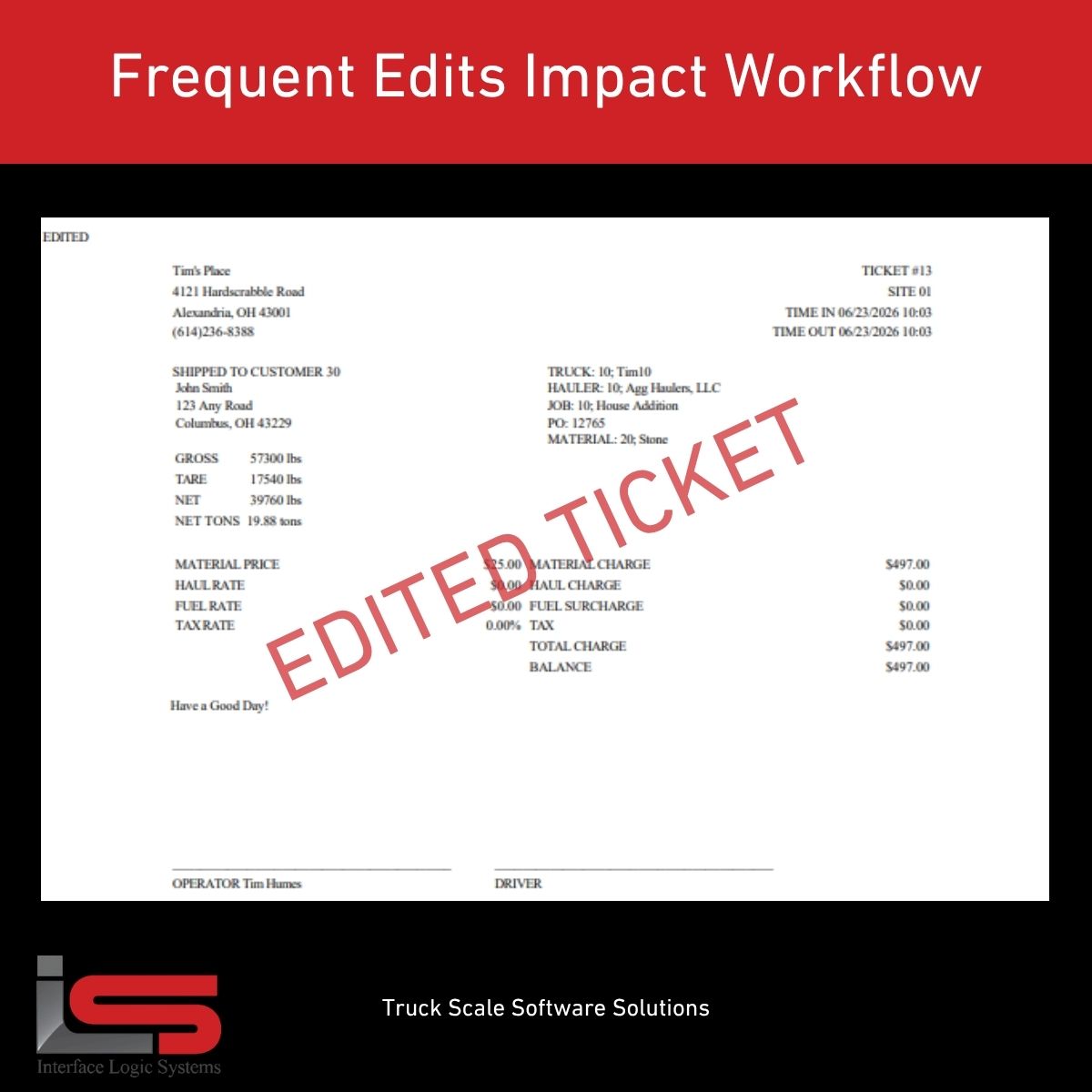
Editing scale tickets is a normal part of daily operations. Operators may enter incorrect information, receive incomplete details, or need to adjust data after a transaction is completed. These situations are expected in high-volume environments. While occasional edits are part of the process, frequent ticket changes can slow down operations and introduce inefficiencies across the workflow.
Why Tickets Need to Be Edited
Errors and Changing Information Are Common
There are many reasons a ticket may need to be edited during the weighing process. In most cases, these adjustments are caused by normal operational challenges.
Common reasons include:
- incorrect material entered
- wrong haul rate selected
- incorrect customer or job information
- miscommunication between drivers and operators
- updated information after the initial transaction
These issues are part of real-world operations and cannot always be avoided.
How Editing Tickets Affects Workflow
Each Correction Adds Time
Every time a ticket needs to be edited, the process slows down. Operators must stop, review the information, make corrections, and confirm accuracy before continuing. These extra steps may seem minor, but when repeated throughout the day, they create noticeable delays in processing.
Interruptions Break Efficiency
Stopping the Process Disrupts Flow
Editing tickets interrupts the normal flow of transactions at the scale. Instead of moving continuously from one truck to the next, operators must pause to correct information. This can result in longer transaction times, increased wait times for drivers, and reduced throughput during busy periods.
Repeated Edits Increase Complexity
More Corrections Lead to More Work
When editing tickets becomes a regular part of the process, it can also create additional work beyond the scale. This may include adjustments to records or reports, clarification of account or load details, and additional communication between teams. What begins as a small correction can expand into more steps that affect overall efficiency.
Improving Accuracy Without Slowing Down
Reducing the Need for Corrections
While editing tickets will always be necessary at times, reducing how often it happens can significantly improve workflow efficiency. Clear communication, consistent processes, and minimizing manual entry can help reduce the need for corrections while keeping operations moving smoothly.
Supporting More Efficient Ticketing
Balancing Flexibility and Efficiency
Efficient systems allow operators to make necessary corrections while minimizing disruption to the overall process. The goal is not to eliminate edits, but to reduce their frequency and impact on daily operations. Interface Logic Systems solutions are designed to support consistent workflows, improve communication, and help reduce inefficiencies associated with ticketing adjustments.
Leave a comment
Comments will be approved before showing up.
Subscribe
Sign up to get the latest on sales, new releases and more …