Menu
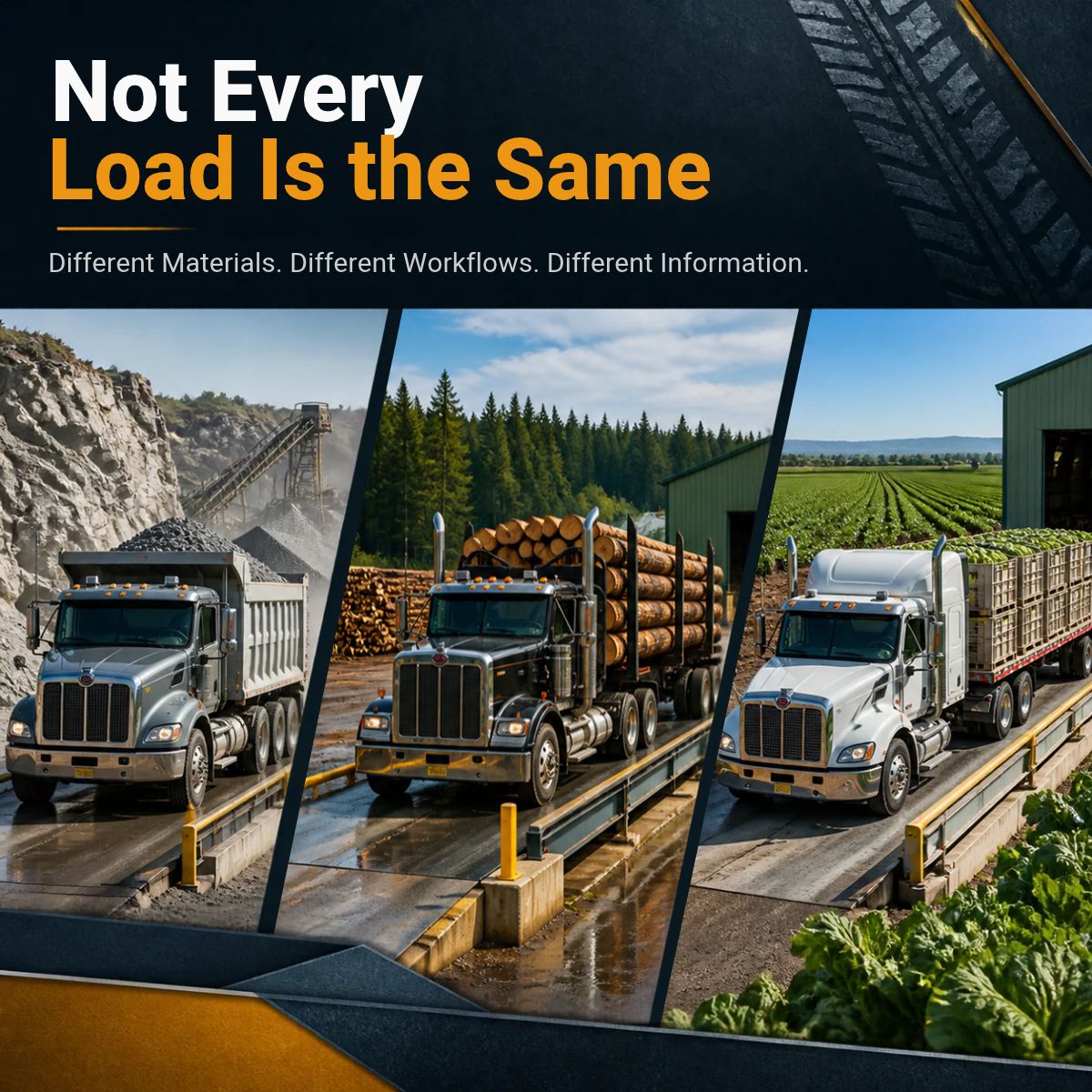

Not Every Load Is the Same
November 09, 2026 3 min read
Why Specialized Operations Require Specialized Workflows
Most Software Starts With an Assumption
Many weighing and receiving systems are built around a simple idea:
A truck arrives.
A weight is captured.
A transaction is recorded.
The truck leaves.
For some operations, that's exactly how the process works.
But not every load follows the same path.
Different industries have different requirements, different workflows, and different information that must be captured before a transaction is complete.
Understanding those differences is often what separates a useful system from one that creates more work.
A Load of Stone Is Different Than a Load of Tomatoes
Consider an aggregate operation.
A truck may arrive carrying a specific material destined for a customer order. The primary transaction focuses on product, quantity, destination, and billing.
Now consider a tomato processor.
The truck may arrive carrying multiple bins. Each bin has a tare weight. The number of bins can vary from load to load. The processor may need to track the grower, field information, delivery date, and other receiving data before the load can be processed.
Both loads are weighed.
Everything surrounding the weight is different.
The Weight Is Only Part of the Story
Many operations need information that goes beyond the scale transaction itself.
Examples include:
- Grower information
- Supplier information
- Customer accounts
- Contracts
- Material classifications
- Delivery locations
- Inventory records
- Traceability requirements
The weight remains important, but the value of the transaction often comes from the information attached to it.
Without that information, visibility becomes limited and reporting becomes more difficult.
Different Industries Create Different Challenges
Over the years, we've seen operations that required unique workflows because the standard process simply didn't match the way the business operated.
Some examples include:
- Multiple companies sharing the same scale
- Landfill and quarry operations managed within a single system
- Raw materials being tracked through manufacturing processes
- Specialized receiving requirements for agricultural products
- Inventory accountability across multiple locations
In each case, the challenge was not capturing a weight.
The challenge was supporting the operational process around the weight.
Traceability Begins at Receiving
For many industries, receiving is where traceability begins.
Organizations may need to know:
- Who delivered the material
- When it arrived
- Where it originated
- How much was received
- Where it was stored
- How it moved through the operation
If that information is not captured accurately at the beginning, maintaining visibility later becomes significantly more difficult.
The transaction at the scale often becomes the first link in a much longer chain of information.
Understanding the Operation Comes First
One of the lessons we've learned over the years is that industries are often less different than they appear.
Whether the material is:
- Aggregate
- Recycled metal
- Logs
- Waste
- Agricultural products
- Bulk commodities
Organizations still need accountability, visibility, reporting, and operational control.
The details change.
The need for accurate information does not.
That's why understanding the workflow is often more important than understanding the material itself.
The Best Solutions Follow the Process
Technology is most effective when it supports the way people actually work.
When software assumes every load looks the same, operations often find themselves adjusting their processes to fit the technology.
The better approach is understanding the operation first.
What information is needed?
What decisions rely on that information?
How does the material move through the business?
Only then does it make sense to design the workflow.
What We Learned
Every load has a story.
A weight may represent inventory arriving at a facility, raw material entering production, a customer shipment, or the beginning of a traceability record.
The most effective systems recognize that the transaction is rarely just about the weight.
It's about understanding everything that happens before and after it.
Because not every load is the same.
And the best solutions are built with that reality in mind.
Leave a comment
Comments will be approved before showing up.
Subscribe
Sign up to get the latest on sales, new releases and more …