Menu
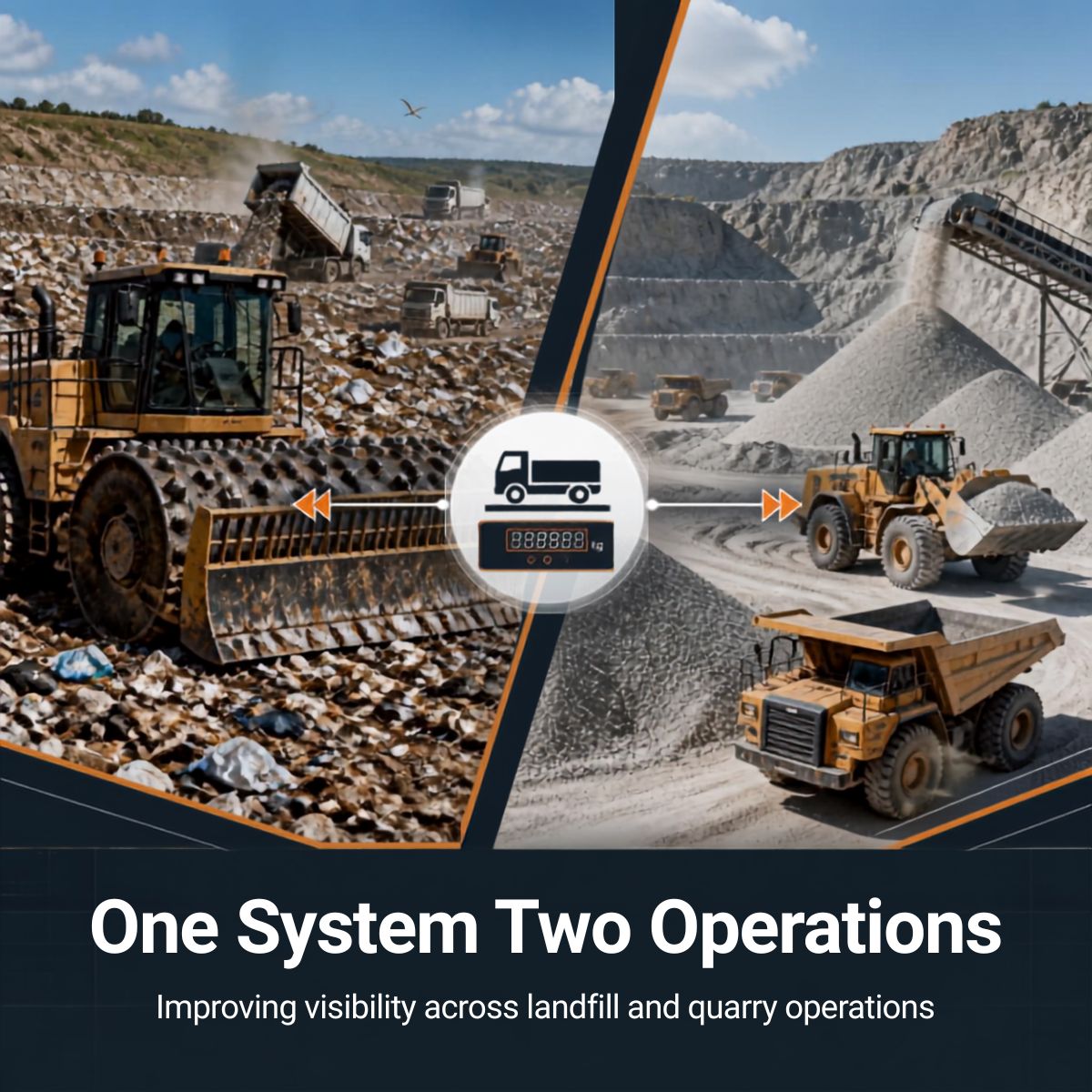

When a Landfill and Quarry Share the Same System
September 28, 2026 3 min read
How One Operation Benefited From a Single Source of Operational Visibility
Two Businesses, One Operation
Most people think of landfills and quarries as completely different operations. One manages incoming waste materials and disposal activities. The other produces and sells aggregate materials used in construction, infrastructure, and development projects.
They serve different customers. They handle different materials. They often operate under different regulatory requirements. On paper, they appear to have very little in common.
However, some organizations manage both types of operations, creating unique challenges when it comes to weighing, reporting, customer management, and operational visibility.
Separate Activities, Shared Resources
A landfill and quarry may operate as separate business units, but they often share resources behind the scenes.
Those shared resources can include:
- Scale facilities
- Administrative staff
- Customer service personnel
- Accounting departments
- Management teams
- Reporting systems
As operations grow, maintaining separate systems for each business can create additional complexity. Information may exist in different databases. Reports may need to be combined manually. Management may struggle to gain a complete view of activity across the organization. The challenge isn't simply collecting information. The challenge is making information useful.
More Than Weighing Trucks
Most scale transactions begin with a weight. But that's only the beginning of the process.
A landfill transaction may involve:
- Customer information
- Vehicle identification
- Material classification
- Disposal tracking
- Regulatory reporting
- Billing information
A quarry transaction may involve:
- Customer accounts
- Aggregate products
- Load quantities
- Pricing structures
- Inventory management
- Delivery tracking
Although the transactions are different, both operations depend on accurate information and reliable reporting. Managing that information effectively becomes increasingly important as operations expand.
Visibility Across the Entire Operation
One of the advantages of managing multiple business activities within a single system is visibility. Instead of managing information across multiple disconnected systems, organizations can gain a broader view of what's happening throughout the business.
Management can more easily answer questions such as:
- How many transactions occurred today?
- Which customers are most active?
- What materials are moving through the operation?
- How is each business unit performing?
- Where are operational trends developing?
Having access to accurate information helps organizations make better decisions without relying on multiple disconnected systems.
The Challenge Wasn't the Scale
When people think about scale management software, they often focus on the weighing process itself. In reality, the scale is usually the simplest part. The bigger challenge is managing the information that surrounds each transaction.
A landfill and quarry may share a scale, but they still require:
- Different transaction types
- Different reporting requirements
- Different operational workflows
- Different customer relationships
The goal is not simply recording a weight. The goal is creating a system that supports the way the business operates.
Bringing Operations Together
Organizations often reach a point where operational visibility becomes just as important as operational efficiency.
As information becomes fragmented across multiple systems, reporting becomes more difficult and decision-making becomes slower.
Bringing operations into a single platform can help reduce complexity while improving access to information.
This does not mean every business process becomes identical.
It means the organization gains a clearer picture of how those processes work together.
A Common Lesson
Over the years, we've seen many operations that didn't fit neatly into standard assumptions. Some involved multiple companies sharing infrastructure. Others involved unique inventory requirements, specialized reporting needs, or unconventional workflows.
The common thread is that every operation has its own requirements. Successful systems recognize those differences and support the way people actually work.
Technology is most effective when it adapts to the operation rather than forcing the operation to adapt to the technology.
What We Learned
A landfill and quarry may appear to be separate businesses, but they often share a common need: Reliable information.
When transaction data, reporting, customer information, and operational visibility are brought together, organizations gain a better understanding of what is happening across the entire operation.
The result is not simply better reporting.
It's better decision-making.
And that's often where the greatest value is found.
Leave a comment
Comments will be approved before showing up.
Subscribe
Sign up to get the latest on sales, new releases and more …